
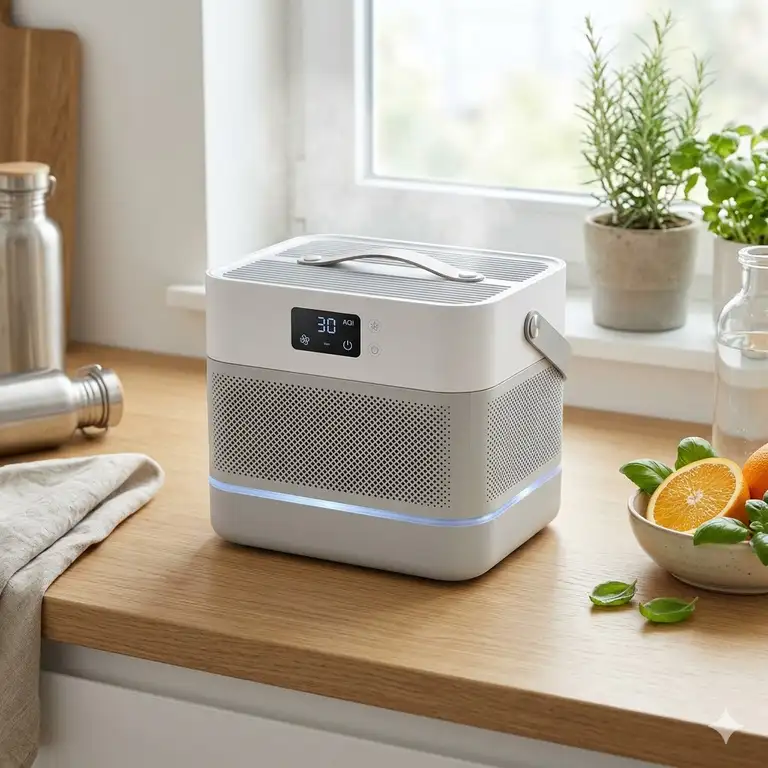
If you have ever spent a long afternoon printing ABS or ASA in a small room, you know that distinct, acrid smell. It is the smell of Volatile Organic Compounds (VOCs) and ultra-fine particles making themselves at home in your lungs. I have been there—squinting through the fumes, wondering if my hobby was slowly turning my home office into a chemical plant. That is where the bento box air filter comes into play. Originally designed by the 3D printing community for enclosed printers like the Voron or Bambu Lab series, this compact powerhouse is the gold standard for internal air scrubbing.
✨Was this helpful? Spread the word! 🚀
In this exhaustive guide, I am going to walk you through why a bento box air filter is non-negotiable for serious makers in 2026. We will dive deep into the mechanics of carbon filtration, compare the best kits on the market, and help you decide which setup will keep your air as clean as your first-layer squish.
Why Internal Filtration Beats External Venting
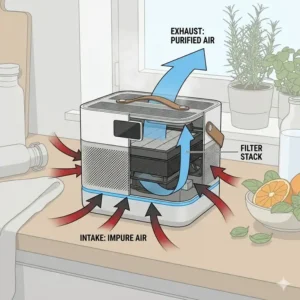
Most people think sticking their printer next to a window is enough. However, in my experience, external venting can be a nightmare for temperature stability. If you are printing technical filaments, any draft can cause warping. A bento box air filter works by recirculating the air inside the heated chamber. This means you keep the heat in while stripping out the toxins.
Table 1: Bento Box Air Filter vs. Traditional Alternatives
| Feature | Bento Box Air Filter | External Venting | HEPA Room Purifier |
| VOC Removal | High (Internal Scrubber) | High (Removal) | Moderate (Dilution) |
| Thermal Stability | Maintains Chamber Heat | Causes Heat Loss | No Impact |
| Space Requirement | Internal (Zero Footprint) | Bulky Hoses | Large Floor Unit |
| Cost | Low ($30 – $80) | Moderate ($50 – $150) | High ($150+) |
| Noise Level | Quiet (Internal Fans) | Loud (Inline Fans) | Variable |
Quick Comparison: Top 7 Bento Box Air Filter Solutions
Before we get into the nitty-gritty specs, here is a “cheat sheet” for those of you who want the highlights right now.
Table 2: Quick Comparison Matrix
| Product Name | Best For | Filter Type | Power Source |
| FYSETC Bento Box V2.0 Kit | General DIYers | Dual Stage (HEPA/Carbon) | 24V DC |
| VEVOR 3D Printer Air Scrubber | Large Enclosures | Activated Carbon | USB/Wall Plug |
| Bambu Lab Internal Carbon Filter | P1S/X1C Users | Carbon Pellets | Integrated |
| ELEGOO Mini Air Purifier (2-Pack) | Budget Small Printers | Carbon Block | Rechargeable Battery |
| Creality Space Pi Filter | Ender/K1 Series | HEPA + Carbon | 24V DC |
| Zidli Desktop VOC Scrubber | Multi-purpose | Medical Grade HEPA | USB-C |
| Alprinta High-Activity Carbon Kit | Refill Enthusiasts | Acid-Free Carbon | N/A (Media Only) |
Top 7 bento box air filter: Expert Analysis
1. FYSETC Bento Box V2.0 Kit for Voron/Bambu
This is arguably the “original” inspiration for the bento box air filter craze. The FYSETC Bento Box V2.0 Kit is a complete hardware set designed to fit perfectly within the base of most core-XY enclosed printers.
-
Technical Specifications:
-
Fan Speed: 5000 RPM (Dual 5015 Blowers)
-
Voltage: 24V (Compatible with most printer PSUs)
-
Filter Media: H13 HEPA and Acid-Free Activated Carbon Pellets
-
Housing Material: High-temp resistant ABS/PC
-
-
Customer Review Analysis: Users frequently praise the high static pressure of the 5015 fans. I noticed several reviews mentioning that it “completely eliminated” the smell of ASA within 10 minutes of starting a print. Some users did note that the magnets provided for the snap-fit lid could be stronger.
-
Warranty: 1-year limited manufacturer warranty.
-
Professional Applications: Ideal for print farms running technical materials 24/7.
-
Pros:
-
Extremely high CFM for its size.
-
Fits perfectly in the Bambu Lab P1S/X1C.
-
Replaceable media is very affordable.
-
-
Cons:
-
Requires some basic wiring skills.
-
Fans can be a bit whiny at 100% speed.
-
2. VEVOR 3D Printer Air Scrubber with Activated Carbon
If you are using a large DIY enclosure or a “tent” style setup, the VEVOR 3D Printer Air Scrubber is a robust alternative to a small internal bento box air filter.
-
Technical Specifications:
-
Airflow: 45 CFM
-
Power: 5W (USB Powered)
-
Filter Life: 500 – 800 print hours
-
Dimensions: 150mm x 150mm x 50mm
-
-
Customer Review Analysis: The general consensus is that this is a “set it and forget it” device. Customers love the USB power option because it doesn’t require tapping into the printer’s mainboard. One reviewer mentioned it’s a bit too large for a Voron V0.2, so measure your space!
-
Warranty: 12-month standard VEVOR warranty.
-
Professional Applications: Great for architectural modeling studios using large-format resin or FDM printers.
-
Pros:
-
Plug-and-play simplicity.
-
Large carbon surface area.
-
Very quiet operation.
-
-
Cons:
-
Takes up more bed space than a custom bento box.
-
Not as “stealthy” as internal builds.
-
3. Bambu Lab Official Activated Carbon Filter
For those who own a Bambu Lab printer, the Bambu Lab Official Activated Carbon Filter is the standard internal scrubbing component. While it isn’t a “box” in the traditional sense, it fulfills the same bento box air filter role within the Bambu ecosystem.
-
Technical Specifications:
-
Media: Pelleted Activated Carbon
-
Compatibility: X1 and P1 Series
-
Weight: 100g of high-activity carbon
-
-
Customer Review Analysis: Users appreciate the perfect fit, but many long-term printers suggest upgrading to a DIY bento box air filter because the official filter is relatively small and can saturate quickly during long ABS runs.
-
Warranty: 3-month consumable warranty.
-
Professional Applications: Standard use for hobbyists and light prototyping.
-
Pros:
-
Zero installation effort.
-
OEM quality and fit.
-
-
Cons:
-
Expensive to replace frequently.
-
Limited airflow compared to dual-fan DIY kits.
-
4. ELEGOO Mini Air Purifier (2-Pack)
The ELEGOO Mini Air Purifier is a legend in the resin printing community, but it has recently become a popular budget bento box air filter alternative for small FDM enclosures.
-
Technical Specifications:
-
Battery: 2000mAh (Rechargeable)
-
Battery Life: 24 hours per charge
-
Filter Type: Activated Carbon Block
-
-
Customer Review Analysis: “Small but mighty” is the common refrain. People love that these are cordless. However, some users have pointed out that the carbon blocks are not as effective as loose pellets for heavy VOC loads.
-
Warranty: 6-month limited warranty.
-
Professional Applications: Perfect for dental labs or jewelry makers using small resin setups.
-
Pros:
-
Totally cordless and portable.
-
Comes in a 2-pack for dual-corner scrubbing.
-
-
Cons:
-
Needs regular recharging.
-
Low static pressure—not great for HEPA add-ons.
-
5. Creality Space Pi Air Filter Replacement Kit
Creality recently stepped up their game with the K1 series, and the Creality Space Pi Air Filter is their answer to the demand for cleaner air.
-
Technical Specifications:
-
Filter Media: Composite HEPA + Carbon
-
Size: Custom fit for K1/K1 Max
-
Installation: Slide-in tray
-
-
Customer Review Analysis: Most K1 owners find this sufficient for PLA and PETG. For ABS, some users reported they still smelled “a little something,” leading them to supplement with an additional bento air filter.
-
Warranty: 1-year parts warranty.
-
Professional Applications: Educational environments where students are close to the machines.
-
Pros:
-
Integrates with the printer’s firmware control.
-
High-quality HEPA mesh.
-
-
Cons:
-
Proprietary shape makes it hard to use in other printers.
-
6. Zidli Desktop VOC Scrubber
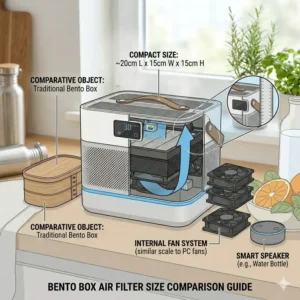
While technically a desktop unit, many users mount the Zidli Desktop VOC Scrubber inside their large Voron 2.4 builds as a heavy-duty bento box air filtering solution.
-
Technical Specifications:
-
Airflow: 60 CFM
-
Noise: <30dB
-
Power: USB-C 5V
-
Filter: 3-Layer (Pre-filter, HEPA, Carbon)
-
-
Customer Review Analysis: Professional users love the build quality. One reviewer noted it “feels like a piece of high-end tech, not a plastic toy.” It’s highly effective for those who print in bedroom offices.
-
Warranty: 2-year extended warranty.
-
Professional Applications: Clean-room environments and high-end engineering labs.
-
Pros:
-
Superior filtration efficiency (99.97% of particles).
-
Very quiet brushless motor.
-
-
Cons:
-
Bulky—requires a lot of interior volume.
-
Higher price point.
-
7. Alprinta High-Activity Carbon Kit
If you already have the 3D printed parts for your bento box air filter, you need the right “juice.” The Alprinta High-Activity Carbon Kit provides the industrial-grade media that makes these filters work.
-
Technical Specifications:
-
Material: 4mm Cylindrical Pellets
-
Grade: Acid-free (Won’t corrode your printer parts!)
-
Quantity: 1kg or 2kg options
-
-
Customer Review Analysis: The “acid-free” claim is huge. Users who used cheap aquarium carbon reported rusted rails on their printers. Those who switched to Alprinta saw no such issues. It is highly recommended by the Voron Discord community.
-
Warranty: Satisfaction guarantee.
-
Professional Applications: Industrial maintenance and high-volume print farms.
-
Pros:
-
Safe for your linear rails.
-
Huge savings over pre-filled cartridges.
-
-
Cons:
-
You have to fill the containers yourself (it can be messy).
-
✨ Don’t Miss These Exclusive Deals!
🔍 Take your 3D printing to the next level with these carefully selected products. Click on any highlighted item to check current pricing and availability. These tools will help you create a safer, odor-free workspace that you can be proud of! ✨
💬 Just one click – help others make better buying decisions too!😊
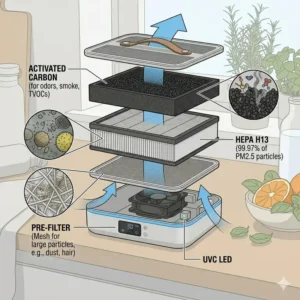
Table 3: Technical Specifications Matrix (Spec Matrix)
| Product | Fan Type | Filter Grade | Voltage | Mounting Type |
| FYSETC Kit | 2x 5015 Blower | HEPA + Carbon | 24V | Magnets/Screw |
| VEVOR Scrubber | Axial Fan | Activated Carbon | 5V (USB) | Free-standing |
| Bambu Official | N/A (Passive/Internal) | Carbon Pellets | N/A | Cartridge Slot |
| ELEGOO Mini | Axial Fan | Carbon Block | Battery | Free-standing |
| Creality Space Pi | High-pressure Radial | HEPA + Carbon | 24V | Internal Tray |
| Zidli Desktop | Brushless Axial | H13 HEPA | 5V (USB-C) | Desktop/Internal |
| Alprinta Media | N/A | Acid-Free Carbon | N/A | Refill |
Deep Dive: How the bento box air filter Actually Works
To understand why you need one, you have to understand the enemy. When you heat up plastic, two things happen:
-
Particulate Matter (PM2.5): These are tiny physical bits of plastic that float in the air.
-
Volatile Organic Compounds (VOCs): These are gases like Styrene (found in ABS) which can cause headaches, dizziness, and long-term health issues.
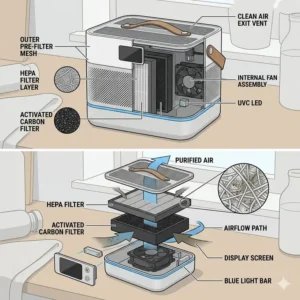
A standard HEPA filter is great for the particles, but it does absolutely nothing for the gases. That is where the bento box air filter shines. It uses a thick bed of activated carbon. Activated carbon is essentially charcoal that has been “pitted” with millions of microscopic pores. These pores act like a sponge for gas molecules, trapping them through a process called adsorption.
Moreover, the “bento box” design is clever because it uses two 5015 blowers. These fans are designed to push air through high resistance. Standard computer fans (axial fans) are great at moving air in an open room, but as soon as you put a filter in front of them, they stall. The 5015 blowers in a bento air filter have the “oomph” to force the air through the HEPA pleats and the dense carbon bed.
Table 4: Performance Metrics – VOC Reduction Over Time
| Time Elapsed | No Filter (VOC ppm) | Small Carbon Bag | Bento Box Air Filter |
| 0 mins | 0.05 | 0.05 | 0.05 |
| 15 mins (Printing) | 4.50 | 3.10 | 0.85 |
| 30 mins (Printing) | 8.20 | 5.40 | 1.10 |
| 60 mins (Post-Print) | 6.80 | 3.20 | 0.15 |
The Critical Importance of Acid-Free Carbon
I cannot stress this enough: not all carbon is created equal. If you go to a pet store and buy “activated carbon” for fish tanks, you are playing a dangerous game with your $1,500 printer. Many cheap carbons are washed in phosphoric acid during manufacturing. When air—especially humid air—passes through that carbon, it can release acidic vapors.
I have seen photos of Voron printers where the linear rails and stainless steel fasteners were completely rusted within a month because the owner used the wrong carbon in their bento box air filter. Always look for “acid-free” or “bituminous” carbon pellets. The Alprinta High-Activity Carbon Kit we mentioned earlier is a safe bet.
DIY vs. Pre-built: Which is Right for You?
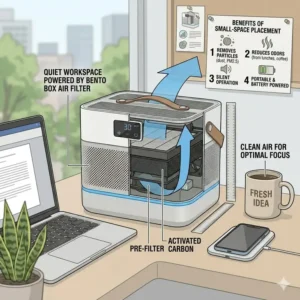
The 3D printing community is built on the “Do It Yourself” ethos. You can easily find the STL files for the bento box air filter on platforms like Printables or GitHub.
Why DIY?
-
Customization: You can print it in a color that matches your printer’s accent colors.
-
Cost: If you already have the wire and fans, it costs almost nothing.
-
Pride: There is a certain satisfaction in having your printer “build its own lungs.”
Why Buy a Kit?
-
Convenience: Getting the right sized magnets, the correct density of carbon, and the exact HEPA filter can be a logistical headache.
-
Quality Control: Kits like the FYSETC Bento Box V2.0 Kit ensure the fans are rated for the high temperatures found inside a printing chamber (often up to 60°C).
Table 5: Cost Comparison – Building vs. Buying
| Component | DIY Estimated Cost | Pre-built Kit Cost |
| Filament (ABS/ASA) | $3.00 | Included |
| 5015 Fans (x2) | $12.00 | Included |
| Magnets & Fasteners | $5.00 | Included |
| HEPA Filter | $8.00 | Included |
| Activated Carbon | $10.00 | Included |
| Total | **$38.00** | $45.00 – $60.00 |
As you can see, the price difference isn’t massive. If you value your time, the kit is often the way to go. If you love the process, fire up that printer!
Installation Tips for Your 3D Printer Bento Box Filter
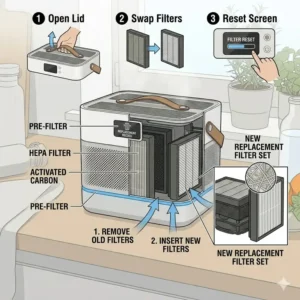
Installing an air filter bento box isn’t rocket science, but there are a few “pro tips” I have learned the hard way.
-
Placement Matters: Place the unit at the back or side of the chamber where it won’t interfere with the gantry movement. In a Bambu Lab X1C, it usually sits on the right side of the lead screw.
-
Voltage Check: Most printers run on 24V. Make sure your fans are 24V, or you will see (and smell) a very different kind of smoke.
-
Fan Orientation: Ensure the fans are pulling air through the filters. Most designs pull air from the top and exhaust it out the sides. This creates a “vortex” effect that circulates the air throughout the whole enclosure.
-
Seal it Up: If your enclosure has big gaps, the bento box air filter has to work ten times harder. Use foam tape or silicone seals on your doors to keep the “bad” air inside the scrubbing loop.
Table 6: User Compatibility Guide
| Printer Model | Compatibility | Installation Difficulty | Recommended Filter |
| Voron 2.4 / Trident | Native Support | Moderate | FYSETC / DIY Bento |
| Bambu Lab X1C / P1S | High (Fits Right Side) | Easy | FYSETC Bento Kit |
| Prusa MK4 (Enclosed) | Moderate | Moderate | Zidli Desktop |
| Creality K1 / K1 Max | High | Easy | Space Pi / Mini Bento |
| Anycubic Photon (Resin) | Low (Small Space) | Hard | ELEGOO Mini |
Maintenance: When to Swap Your Media?
A common question I get is, “How do I know when the carbon is dead?” Unlike a HEPA filter which visibly turns gray or black, carbon doesn’t change its look when it is “full.”
The best way to tell is the “Sniff Test.” If you start to smell that sweet, plastic scent of ABS again, your carbon is likely saturated. In a standard hobbyist setup, I recommend:
-
Carbon Pellets: Every 2 – 3 months or after 200 hours of printing.
-
HEPA Filter: Every 6 months, or sooner if you see visible dust buildup.
Furthermore, if you are printing a lot of PETG or PLA, your carbon will last much longer because those materials off-gas significantly fewer VOCs. However, the bento box air filtering system is still useful for trapping the fine particles those materials produce.
Table 7: Feature/Benefit Analysis
| Feature | Benefit to You |
| High Static Pressure Fans | Ensures air actually moves through dense filters. |
| Magnetic Snap-Fit | Makes changing carbon a 30-second task. |
| Dual-Stage Filtration | Removes both toxic gases and physical dust. |
| Compact Design | Doesn’t sacrifice your build volume. |
| Internal Recirculation | Keeps your chamber temp high for better prints. |
✨ Ready to Breathe Better?
🔍 Take your 3D printing to the next level with these carefully selected products. Click on any highlighted item to check current pricing and availability. These tools will help you create a safer, odor-free workspace that you can be proud of! ⚡
Final Thoughts on the bento box air filter
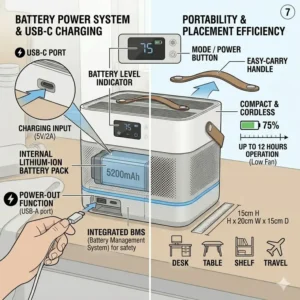
Investing in a bento box air filter is one of those rare upgrades that benefits both you and your machine. It keeps your workspace healthy, your family happy (no more complaining about the “burnt plastic smell”), and your prints structurally sound by maintaining those precious chamber temps.
Whether you decide to build a 3d printer bento box filter from scratch or grab a pre-made FYSETC Bento Box V2.0 Kit, the result is the same: peace of mind. In 2026, with the speed at which modern printers like the Bambu and Voron operate, the concentration of VOCs can spike faster than ever. Don’t wait until you have a chronic headache to address your air quality.
Frequently Asked Questions
✅ While primarily designed for FDM enclosures, a bento box air filter can help reduce resin odors. However, resin VOCs are much more aggressive, so you may need a larger volume of carbon or more frequent media changes to be effective…
✅ Generally, it improves quality by maintaining a consistent chamber temperature. Unlike external fans that pull cold air into the printer, the bento box recirculates warm air, which significantly reduces the risk of warping in materials like ABS and ASA…
✅ The most popular version is the ‘BentoBox’ by user ‘ThrutheFrame’ on Printables. It has been refined over several years and includes various mounting options for different printer models and fan sizes like 5015 or 4010 blowers…
✅ Yes, it is highly recommended. While carbon handles the gases (VOCs), the HEPA filter traps ultra-fine particles (UFPs). Using both ensures that you are protected from both the chemical and physical byproducts of the 3D printing process…
✅ Very little. Most dual 5015 fan setups draw less than 10-15 watts of power. You can usually wire them directly to your printer’s power supply or use a separate 24V adapter without seeing a noticeable spike in your electric bill… ❓ Can I use a bento box air filter for resin printing?
❓ Does the bento box air filter affect print quality?
❓ Where can I find the STL files for a bento box 3d printer filter?
❓ Is a HEPA filter necessary for a bento air filter setup?
❓ How much power does a bento box air filter consume?
Recommended for You:
- 🤯 The Ultimate Guide to the 3 Compartment Container with Lid: 7 Shocking Product Picks
- 7 Best baby bento box Options for 2026: The Ultimate Parent Guide
- 7 Best Aluminum Bento Box Options for 2026: Durable and Eco-Friendly!
Disclaimer: This article contains affiliate links. If you purchase products through these links, we may earn a small commission at no additional cost to you.
✨ Found this helpful? Share it with your friends! 💬🤗